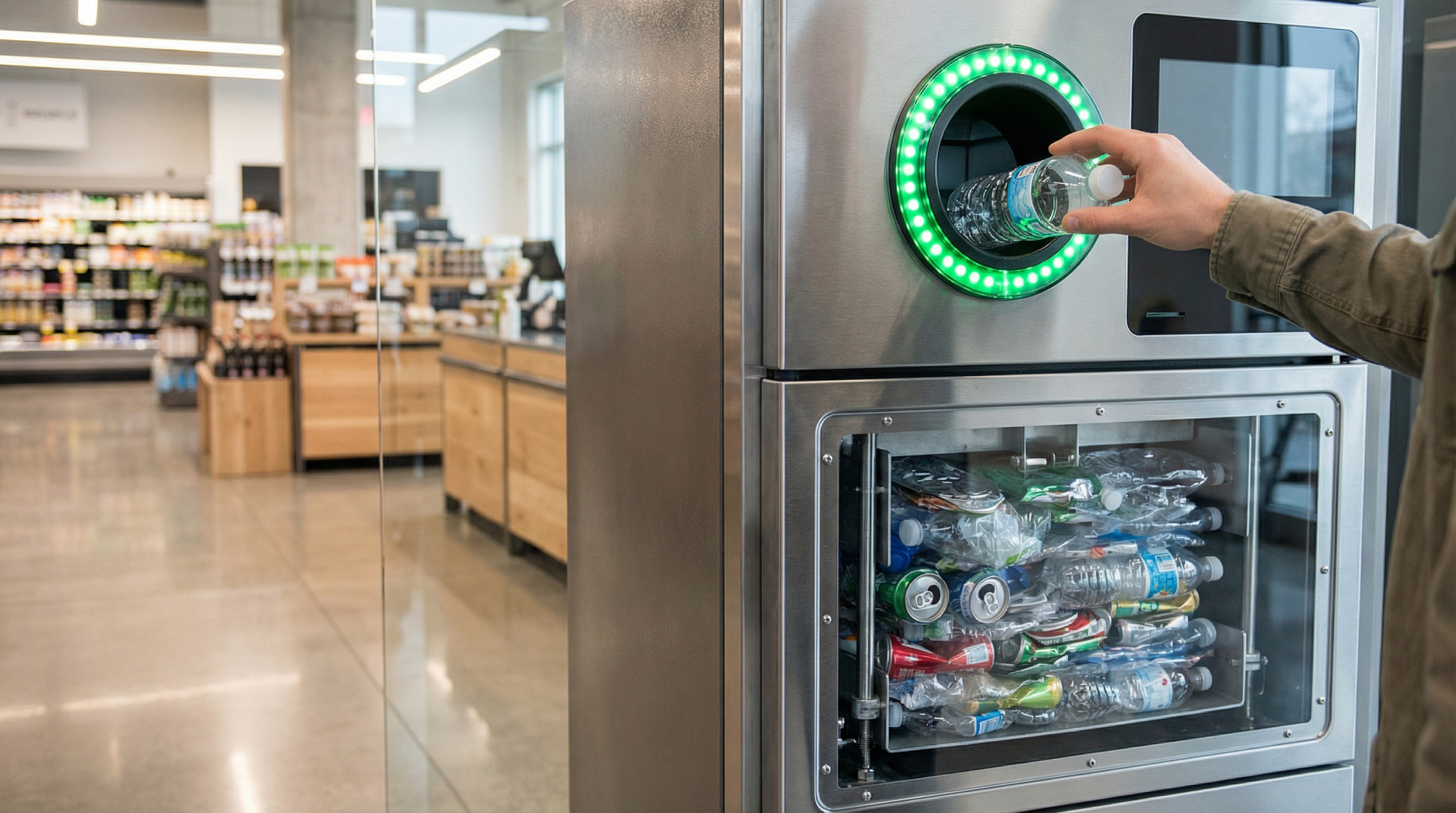
The UK packaging compliance landscape is about to gain another major regulatory layer. Alongside the Extended Producer Responsibility (EPR) scheme that obligated producers are already preparing for, a second system is now firmly on the horizon: the Deposit Return Scheme (DRS). Due to launch in October 2027, the DRS will fundamentally change how drinks containers are collected, returned, and recycled in the UK.
If you produce, import, or sell drinks in the UK market, this scheme will directly affect your operations, your costs, and your packaging decisions. Even if your primary packaging obligations sit under EPR rather than DRS, the interaction between the two regimes means you cannot plan for one without understanding the other.
This guide covers everything producers need to know about the DRS: what it is, what is in scope, what your obligations will be, how it interacts with EPR, and the practical steps you should be taking right now to prepare.
What Is the Deposit Return Scheme?
A Deposit Return Scheme is a system where consumers pay a small deposit on qualifying drinks containers at the point of sale. When they return the empty container to a designated collection point, typically a reverse vending machine at a supermarket or retailer, they receive the deposit back. The containers are then aggregated, sorted, and sent for recycling through a dedicated stream that operates separately from kerbside collection.
The deposit is expected to be set at 20p per container, though the final amount will be confirmed by the Deposit Management Organisation closer to launch. This flat-rate deposit applies regardless of whether the container is a 330ml aluminium can or a 2-litre PET bottle. The simplicity is deliberate: consumers should not have to calculate different deposit amounts for different containers.
The aim of the DRS is to dramatically boost recycling rates for drinks containers specifically. While kerbside collection captures a significant proportion of packaging waste, drinks containers consumed on-the-go, at events, in workplaces, and in public spaces are disproportionately likely to end up in litter or general waste bins rather than recycling. A deposit creates a direct financial incentive for consumers to return containers, and the evidence from countries that already operate deposit return systems, including Germany, Norway, Sweden, and the Netherlands, is compelling. Return rates in mature DRS markets regularly exceed 90%, compared to the 70-75% capture rate that kerbside collection alone typically achieves for drinks containers in the UK.
The DRS is not a replacement for EPR or for kerbside recycling. It is an additional, targeted mechanism for a specific subset of packaging: drinks containers. It will operate alongside EPR, and the interaction between the two systems is one of the most important things for producers to understand. For a broader view of how UK packaging regulation compares with the EU approach, see our guide on UK EPR vs EU PPWR.
When Does the DRS Launch?
The UK Deposit Return Scheme is scheduled to go live in October 2027 for England, Wales, and Northern Ireland.
Key Date: October 2027
The DRS launch date of October 2027 was confirmed by DEFRA in 2025. This followed repeated delays from the original target of 2025, driven by the complexity of establishing collection infrastructure, appointing the DMO, and aligning the scheme across three nations.
Scotland originally planned to introduce its own DRS ahead of the rest of the UK, with a launch date that was pushed back multiple times from its initial 2023 target. Following protracted debate about the inclusion of glass and concerns about creating a separate system for the Scottish market, the Scottish Government agreed to align with the England, Wales, and Northern Ireland scheme. This means the UK will now operate a single, unified DRS from October 2027, which is significantly simpler for producers who sell across the UK market.
The unified approach was a pragmatic decision. Operating separate deposit return systems in Scotland and the rest of the UK would have created enormous complexity for producers, retailers, and logistics providers. Products crossing the border would have needed different labelling, different deposit levels, and different return mechanisms. A single UK-wide scheme avoids all of this.
What Is In Scope?
The DRS applies to a defined set of drinks containers. Not all packaging is in scope, and not all drinks containers are in scope. The boundaries are specific, and getting them right is essential for compliance planning.
| Container Type | In Scope? | Details |
|---|---|---|
| PET plastic bottles | Yes | Up to 3 litres capacity. Covers water, soft drinks, juices, alcohol |
| Aluminium cans | Yes | All sizes. Soft drinks, beer, cider, energy drinks, etc. |
| Steel cans | Yes | All sizes used for drinks |
| Glass bottles | Partial | On-trade and hospitality initially. Full inclusion under review |
| Drinks cartons | No | Not included in the current scope |
| Pouches | No | Not included in the current scope |
| HDPE milk bottles | No | Excluded initially; already achieve high kerbside recycling rates |
| Multipack wrapping | No | Secondary/transit packaging, not a drinks container |
The scheme covers drinks only. This includes water, soft drinks, juices, smoothies, alcoholic beverages (beer, cider, wine, spirits in qualifying containers), energy drinks, and sports drinks. Food products in similar containers, such as cooking oils, sauces, or soups, are not in scope even if they are packaged in PET bottles or cans.
The treatment of glass bottles is worth particular attention. Glass was one of the most contentious elements of the DRS design. Glass bottles are heavy, fragile, and create operational challenges for reverse vending machines. The current plan includes glass for on-trade (pubs, restaurants, hospitality) but the full inclusion of glass in the retail DRS remains under review. Producers of glass-bottled drinks should monitor DEFRA announcements carefully, as the scope may expand after the initial launch.
Scope Definition Matters
Whether a container is "in scope" for DRS determines whether you need to register with the DMO, pay DRS producer fees, and apply DRS labelling. If you produce drinks in containers that fall within the scope, you have obligations under the DRS regardless of your size or turnover. There is no small producer exemption equivalent to the EPR de minimis threshold.
The Deposit Management Organisation (DMO)
The DRS will be administered by a new body called the Deposit Management Organisation, or DMO. This is a central coordinating entity that will be responsible for the operational delivery of the entire scheme. Unlike EPR, where producers interact with the Environment Agency and compliance schemes, the DRS funnels producer obligations through the DMO.
The DMO's responsibilities include:
- Managing collection infrastructure: Coordinating the network of return points, including reverse vending machines in retail locations, manual return points, and potentially mobile collection units for events and rural areas.
- Handling deposits: Receiving deposit payments from producers, managing the deposit float, and ensuring consumers receive refunds when they return containers.
- Producer registration and reporting: Maintaining the register of obligated producers and collecting data on containers placed on the market.
- Setting producer fees: Calculating and collecting the fees that producers pay to fund the system's operating costs, beyond the deposit itself.
- Coordinating with retailers: Working with supermarkets, convenience stores, and other retailers to install and operate return points.
- Material sales: Selling collected materials to reprocessors. The revenue from material sales helps offset operating costs and keeps producer fees lower.
The DMO appointment process is currently underway, with the organisation expected to be fully established during 2026. Producers should watch for announcements about the DMO's identity and early registration guidance, which are likely to emerge in the second half of 2026.
Producer Obligations Under DRS
If you place drinks in qualifying containers on the UK market, you will have a defined set of obligations under the DRS. These are separate from, and additional to, your EPR obligations.
1. Register with the DMO
All producers of DRS-eligible drinks containers must register with the Deposit Management Organisation. This is a separate registration from your EPR registration with the Environment Agency. Producer registration is expected to open in early 2027, giving producers approximately six months to register before the scheme goes live in October.
2. Report container data
You will need to report the number and type of drinks containers you place on the UK market. This means tracking, at a granular level, how many PET bottles, aluminium cans, steel cans, and (where applicable) glass bottles you sell. The data requirements will be more specific than general EPR tonnage reporting, requiring unit counts by container type and material rather than just weight by packaging category.
3. Pay producer fees
Producers will pay fees to the DMO to fund the collection infrastructure, deposit handling costs, administration, and system overhead. These fees are distinct from EPR fees invoiced by PackUK and are calculated based on the number and type of containers you place on the market. The exact fee structure will be published by the DMO once it is established, but indicative modelling suggests fees in the range of 1-4p per container on top of the deposit itself.
4. Apply DRS labelling
Qualifying containers must carry DRS-compatible labelling, including a deposit return logo and potentially a barcode or digital identifier that allows reverse vending machines to recognise the container and issue the correct refund. This has significant lead-time implications for producers, as packaging design and print plate changes need to be planned months in advance. Producers should begin factoring DRS labelling into their packaging design cycles now, even before the exact labelling specifications are finalised.
5. Meet recyclability requirements
Containers placed into the DRS must meet recyclability standards. This is less of a concern for mainstream PET bottles and aluminium cans, which are already widely recycled, but producers using non-standard colours, coatings, or additives in their containers should review whether these elements could affect the container's compatibility with the DRS recycling stream. From April 2027, all household packaging, including DRS-eligible containers, must also carry mandatory OPRL recyclability labels, so factor both DRS and labelling changes into your packaging design cycle.
DRS and EPR: How They Interact
One of the most important questions for producers of drinks containers is how the DRS interacts with the Extended Producer Responsibility scheme. The short answer is that drinks containers will be subject to both regimes simultaneously, but adjustments will be made to prevent double-counting.
Under EPR, producers pay fees based on the weight and type of all packaging they place on the market. Under DRS, producers pay fees and deposits based on the number of drinks containers specifically. Without adjustment, a producer of PET water bottles would be paying EPR fees for the weight of those bottles and DRS fees for the number of those bottles, effectively funding two separate collection and recycling systems for the same containers.
DEFRA has acknowledged this issue and has indicated that EPR fees for DRS-eligible containers will be adjusted to reflect the fact that those containers are being collected and recycled through the DRS system rather than through kerbside collection. The exact mechanism for this adjustment is still being finalised, and it is one of the key policy details that producers should monitor closely.
The likely approach is that DRS-eligible containers will either be excluded from certain EPR fee categories or will receive a reduced EPR fee rate that reflects the lower burden they place on the kerbside collection system. The rationale is straightforward: if a container is being collected through a DRS return point, funded by the DRS producer fee, it should not also attract the full EPR fee that funds kerbside collection of that same material.
Dual Compliance is Unavoidable
Even with fee adjustments to avoid double-counting, producers of drinks containers will need to register, report, and comply with both EPR and DRS. These are separate regulatory regimes with separate registration processes, separate reporting requirements, and separate enforcement. You cannot rely on DRS compliance to satisfy your EPR obligations, or vice versa.
For producers whose portfolios include both drinks containers (DRS-eligible) and other packaging (EPR-only), the compliance picture becomes more complex. You will need to track and report your packaging data in a way that distinguishes between DRS-eligible containers and non-DRS packaging, because the fee calculations and reporting obligations are different for each category.
How to Prepare Now
October 2027 may seem like a comfortable distance away, but the preparation required for DRS compliance is substantial. Producers who start planning now will be in a far stronger position than those who wait for final regulations. Here is what you should be doing in 2026.
Identify which products are in scope
Conduct an audit of your product portfolio to determine exactly which drinks containers fall within the DRS scope. This is not always as straightforward as it sounds. Consider whether you have products that are borderline, such as concentrate drinks, drinks sold in unusual container formats, or own-label products manufactured for retailers. Document which SKUs are in scope and which are not, and flag any where the classification is uncertain.
Start tracking drinks container data separately
Your EPR data collection processes may already capture packaging weight by material type, but the DRS requires unit-level reporting by container type. If your current systems only track aggregate packaging tonnage, you will need to build the capability to report the number of individual PET bottles, aluminium cans, and steel cans you place on the market. Starting this data collection now, well before registration opens, means you will have clean, tested processes in place when reporting becomes mandatory.
Review packaging design for DRS labelling
DRS labelling requirements will add new elements to your container design. While the exact specifications have not been finalised, you should begin building flexibility into your design and print cycles. If you are planning packaging refreshes or redesigns for products that will be DRS-eligible, incorporate space for a deposit return logo and any barcode or identifier that may be required. The cost of a last-minute label change across multiple SKUs can be significant, so forward planning pays dividends.
Monitor DMO setup announcements
The DMO appointment and setup process will generate a stream of announcements, guidance documents, and consultation opportunities during 2026. Designate someone within your compliance or regulatory team to monitor these developments and assess their implications for your business. Key milestones to watch for include the DMO appointment announcement, draft producer fee schedules, labelling specifications, and registration guidance.
Build DRS into your broader compliance strategy
DRS should not be treated as an isolated project. It interacts with your EPR compliance, your packaging design decisions, your fee modulation planning, and your sustainability reporting. The most effective approach is to integrate DRS preparation into your existing packaging compliance workflow, using a single data platform that handles both EPR and DRS requirements.
The DRS Timeline
| Date | Milestone | Producer Action Required |
|---|---|---|
| 2026 | DMO appointments and organisational setup | Monitor announcements; begin internal scoping and data preparation |
| Late 2026 | Labelling specifications and fee schedules published | Begin packaging design changes for DRS labelling; model fee impact |
| Early 2027 | Producer registration opens with the DMO | Register all DRS-eligible products; submit initial container data |
| October 2027 | DRS goes live across England, Wales, Northern Ireland, and Scotland | Ensure all in-scope containers carry DRS labelling; begin deposit payments |
| 2028 | First full calendar year of DRS operation | Full annual reporting; review fee costs and adjust forecasts |
The most important preparation window is now through early 2027. Keep the full set of EPR and DRS deadlines in view so that DRS milestones do not catch you off guard alongside your existing reporting obligations. Once the DMO is appointed and registration opens, the pace of change will accelerate rapidly. Producers who have already scoped their DRS-eligible products, established unit-level data tracking, and built DRS labelling into their design pipeline will manage the transition smoothly. Those who have not will face a compressed timeline with limited room for error.
What This Means for Different Types of Producers
Soft drinks and water producers
You are squarely in scope. The majority of your product range, PET bottles and aluminium cans, will be DRS-eligible. Your preparation should focus on unit-level data tracking, labelling changes across your full SKU range, and modelling the combined EPR and DRS fee impact.
Alcohol producers and importers
Beer, cider, spirits, and wine producers are affected where products are sold in cans, PET bottles, or (potentially) glass bottles. Importers face additional complexity because products arriving from outside the UK may not carry DRS labelling, requiring relabelling or stickering before sale. Begin conversations with overseas suppliers and contract manufacturers about DRS labelling requirements early.
Retailers and own-label producers
If you commission own-label drinks products, you are likely the obligated producer under DRS. Ensure your procurement and packaging specifications incorporate DRS labelling requirements, and build DRS fees into your product cost models. Retailers also have a separate set of obligations around hosting return points, which will affect store layouts and operations.
Producers not directly in DRS scope
Even if none of your products are DRS-eligible, the scheme affects you indirectly through the EPR system. The adjustment of EPR fees for DRS-eligible containers will change the overall fee pool and its distribution among producers. Additionally, the DRS will increase the collection and recycling rates for drinks containers, which may influence RAM ratings and fee modulation outcomes for the broader packaging market. The financial impact extends to PRN and PERN markets too, as higher DRS collection rates may reduce demand for recovery notes on drinks container materials.
Prepare for DRS alongside your EPR compliance
Repackd helps you track all packaging data in one place, making DRS preparation seamless alongside EPR. Identify which products are in scope, track unit-level container data, and model the combined fee impact across both regimes.
Common Questions and Uncertainties
Several important details of the DRS are still being finalised. Here are the areas where producers should expect further clarity during 2026:
- Exact deposit level: 20p is the widely anticipated figure, but it has not been formally confirmed. The final amount will be set by the DMO.
- Glass inclusion scope: The treatment of glass bottles beyond on-trade remains under review. Full retail inclusion would significantly expand the scheme's impact.
- EPR fee adjustment mechanism: The precise way in which EPR fees will be reduced for DRS-eligible containers is still being designed. This is critical for financial modelling.
- Labelling specifications: The exact design, size, and placement requirements for DRS markings have not yet been published. Expect these in late 2026.
- Online sales: The treatment of drinks containers sold online, including how deposits are charged and containers returned, requires specific guidance.
- Cross-border sales: Products sold across UK nation borders need to work within the unified DRS framework, and the operational details are still being resolved.
None of these uncertainties should prevent you from beginning preparation. The core scope of the scheme, PET bottles, aluminium cans, and steel cans for drinks, is well established. The preparation steps outlined above, scoping, data tracking, labelling planning, and DMO monitoring, are valid regardless of how these details are ultimately resolved.
The Bigger Picture: DRS Within the UK Packaging Compliance Landscape
The Deposit Return Scheme is one component of a broader transformation of UK packaging regulation. Together with EPR reform, Simpler Recycling collection reform, and the Plastic Packaging Tax, it forms a comprehensive system designed to increase recycling rates, reduce packaging waste, and shift costs onto producers in proportion to the environmental impact of their packaging choices.
For producers, this means the era of managing packaging compliance as a simple annual reporting exercise is over. The combined demands of EPR data collection, fee modulation management, DRS registration and reporting, labelling compliance, and design-for-recyclability require a systematic, data-driven approach. Trying to manage this across spreadsheets and manual processes is not just inefficient; it creates genuine compliance risk as the regulatory requirements compound.
The producers who will navigate this transition most successfully are those who invest in their compliance infrastructure now: clean data, integrated tracking systems, and the analytical capability to model costs and optimise decisions across both EPR and DRS simultaneously.
One platform for EPR and DRS readiness
Repackd gives you a single source of truth for all your packaging data. Track materials, model fees, assess recyclability, and prepare for DRS alongside your EPR compliance, all in one place.