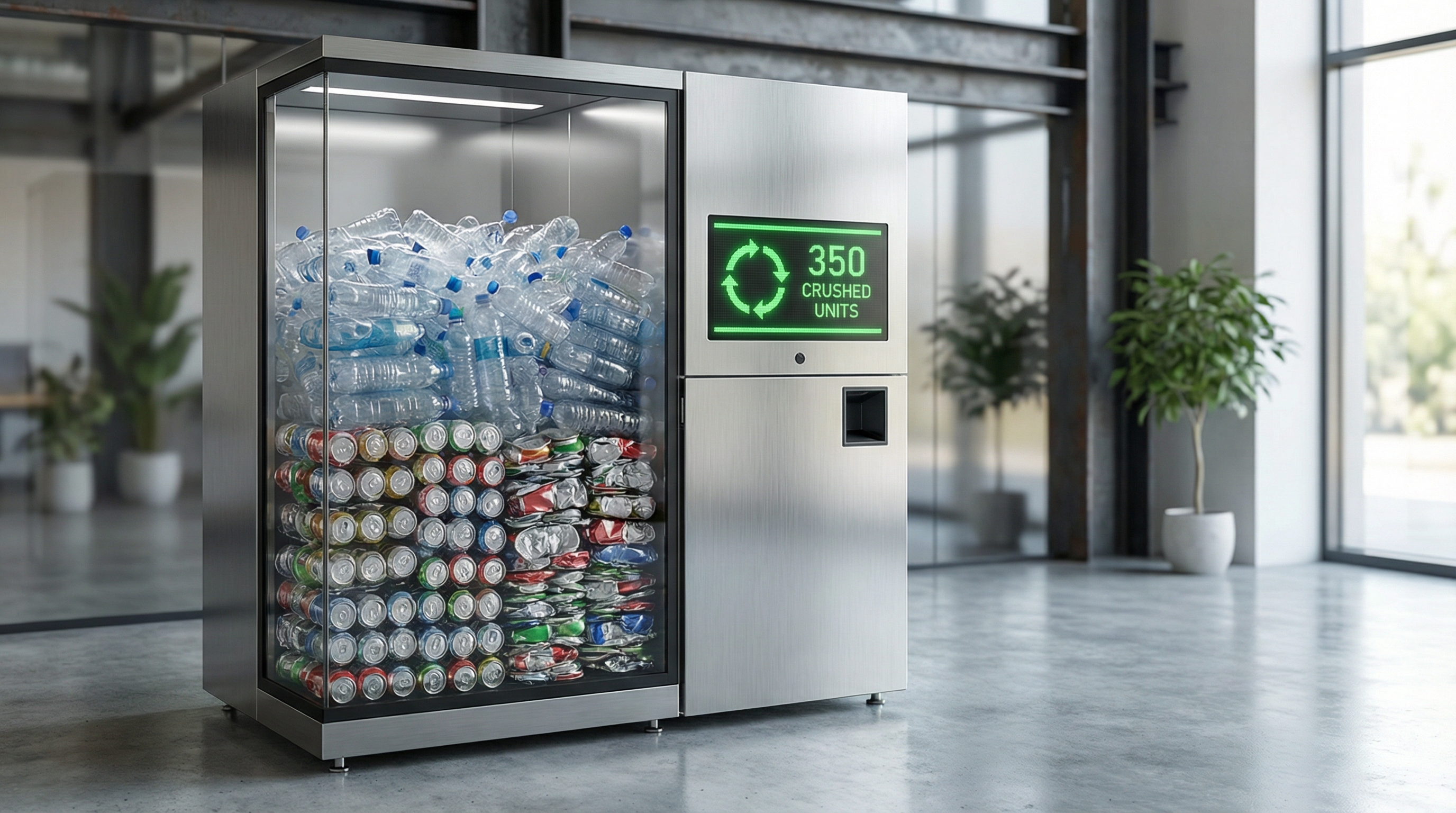
The 2026 compliance year has introduced one of the most significant cost-saving mechanisms available to producers under the UK's Extended Producer Responsibility (EPR) scheme: the ability to offset your EPR invoice by self-managing consumer packaging waste. If your business operates its own collection, sorting, or recycling infrastructure for household packaging, you may be able to substantially reduce what you owe.
This is not a loophole or a workaround. It is a deliberate policy mechanism designed to reward producers who take direct responsibility for the end-of-life management of their packaging. The logic is straightforward: if you are already collecting and recycling your own packaging waste from consumers, you should not also have to pay the full EPR fee that funds local authority collection of that same waste. The offset recognises that your self-managed tonnage is not placing a burden on the municipal collection system.
However, claiming the offset is far from automatic. The evidence requirements are rigorous, the qualifying criteria are specific, and the process demands careful planning throughout the year. Producers who understand how the mechanism works, and prepare accordingly, can achieve meaningful savings on their EPR fee invoices. Those who attempt to claim without proper documentation will find their offset rejected, often with no opportunity to resubmit for that compliance year.
This guide explains exactly what self-managed consumer waste means under EPR, who qualifies, what evidence you need, how the offset calculation works, and the step-by-step process for claiming it.
What Is Self-Managed Consumer Waste?
Self-managed consumer waste, in the context of UK EPR, refers to household packaging waste that a producer directly collects, sorts, and sends for recycling through its own infrastructure or contracted arrangements, rather than relying on local authority kerbside collection or bring-bank systems.
The critical word here is consumer. This means packaging waste that originates from household consumers, the general public, people using your products at home. It does not include packaging waste generated at commercial premises, industrial sites, or within your own supply chain. The distinction between consumer and commercial waste is one of the most important boundaries in the offset mechanism, and one of the most common sources of rejected claims.
Self-managed consumer waste typically arises from schemes where a producer has established a direct pathway for consumers to return packaging. This might be a deposit return system, an in-store take-back programme, a postal return scheme, or a collection service operated at public events or venues. What matters is that the packaging waste moves directly from the consumer into the producer's own management chain, bypassing the municipal waste collection system entirely.
Consumer vs Commercial: The Key Distinction
Only packaging waste collected directly from household consumers qualifies for the self-managed waste offset. Waste collected from shops, offices, factories, warehouses, or hospitality venues is classified as commercial or industrial waste and does not qualify, even if you manage its collection and recycling yourself. If your collection scheme captures a mix of consumer and commercial waste, you must separate and evidence the consumer portion independently.
The EPR framework recognises that when a producer self-manages consumer waste, that tonnage is effectively removed from the local authority collection system. Local councils do not need to collect, sort, and process that waste, so the costs that EPR fees are designed to cover, the costs of municipal packaging waste management, do not apply to those tonnes. The offset reflects this reality by deducting verified self-managed tonnage from the producer's obligation before fees are calculated.
How the Offset Works
The mechanics of the self-managed waste offset are conceptually simple, even if the practical implementation requires careful data management. Here is how it works at a high level:
Your EPR fee invoice is calculated based on the tonnage and type of packaging you place on the UK market. When you submit your annual data return, you report your total packaging placed on market (POM) by material category. The EPR scheme administrator uses this data, combined with the per-tonne fee rates for each material, to calculate your invoice.
With the self-managed waste offset, you also submit verified data on the tonnage of consumer packaging waste you have self-managed during the compliance year. This verified tonnage is then deducted from your total reported tonnage before the fee calculation is applied. The result is a lower obligation tonnage and, consequently, a lower invoice.
| Step | Description | Example |
|---|---|---|
| 1 | Total packaging placed on market (POM) | 500 tonnes of PET plastic |
| 2 | Verified self-managed consumer waste | 75 tonnes of PET plastic |
| 3 | Adjusted obligation tonnage (POM minus offset) | 425 tonnes of PET plastic |
| 4 | EPR fee applied to adjusted tonnage | 425 tonnes × per-tonne rate |
The offset is material-specific. You cannot offset self-managed aluminium waste against your plastic packaging obligation, or vice versa. Each material category is calculated independently: the self-managed tonnage of PET is deducted from your PET obligation, the self-managed tonnage of glass is deducted from your glass obligation, and so on. This means the financial impact of the offset varies depending on which materials you are self-managing, since per-tonne fee rates differ significantly between materials.
Who Qualifies for the Offset?
Not every producer can claim the self-managed waste offset. You must meet specific qualifying criteria, and the scheme you operate must genuinely collect and recycle consumer packaging waste through a verifiable, documented process. The main categories of qualifying producers are:
Producers operating closed-loop return systems
If you operate a closed-loop recycling system where consumers return your packaging to you and you send it for recycling back into the same or equivalent packaging, you are a prime candidate for the offset. Closed-loop systems are the strongest case because they demonstrate a direct, traceable pathway from consumer use back to recycling. Examples include bottle-to-bottle recycling schemes, where PET bottles collected from consumers are reprocessed into new PET bottles, and aluminium can return programmes with verified recycling pathways.
Producers with take-back schemes
Take-back schemes, where consumers return used packaging to a retail location, collection point, or via post, also qualify. The key requirement is that you can demonstrate the packaging waste is collected from consumers specifically, not from commercial sources, and that it is sent for verified recycling. Take-back schemes are increasingly common in sectors such as cosmetics, personal care, and speciality food and drink, where brand loyalty creates a natural incentive for consumers to participate.
Companies running their own collection infrastructure
Some larger producers invest in their own collection infrastructure, ranging from reverse vending machines in public locations to dedicated collection bins at events, venues, or transport hubs. If you operate or fund collection infrastructure that captures consumer packaging waste and channels it into verified recycling, the tonnage collected through this infrastructure can qualify for the offset.
Must be consumer (household) packaging waste
Regardless of which category you fall into, the waste must originate from household consumers. This is a non-negotiable requirement. Packaging waste collected from businesses, even if it is the same product and same packaging format, does not qualify. The EPR offset mechanism is specifically designed to recognise producers who reduce the burden on local authority household waste collection, not commercial waste management.
Minimum Scale Requirements
There are minimum tonnage thresholds for claiming the offset, which vary by material category. These thresholds exist to prevent administrative burden from very small claims and to ensure the verification process is proportionate. Check the current threshold levels for each material before investing in evidence collection for a self-managed waste claim.
Evidence Requirements (Changed 1 January 2026)
The evidence requirements for claiming the self-managed waste offset were significantly tightened from 1 January 2026. If you claimed the offset in previous compliance periods, or are planning your first claim, you must ensure your evidence meets the updated standards. Claims submitted with evidence that met the pre-2026 requirements but does not meet the current requirements will be rejected.
The updated evidence requirements reflect a desire by the regulators to ensure that only genuinely self-managed waste is offset, and to prevent fraudulent or inflated claims. Here is what you need:
Waste transfer notes
Every movement of self-managed waste must be accompanied by a waste transfer note (or a season ticket for regular collections) that complies with the Duty of Care regulations. These notes must identify the waste type, the quantity, the origin (your collection point or scheme), the carrier, and the destination. Waste transfer notes are a legal requirement for all movements of controlled waste, and their absence is one of the most common reasons for offset claims being rejected.
Recycling certificates
You need recycling certificates from accredited reprocessors confirming the tonnage of self-managed waste that was actually recycled. It is not sufficient to show that waste was collected and transported; you must demonstrate that it reached a reprocessor and was recycled. The certificates must come from reprocessors who are accredited by the Environment Agency or the relevant devolved authority, and they must specify the tonnage, material type, and the recycling process used.
Third-party verification
From 2026, self-managed waste claims above certain tonnage thresholds require independent third-party verification. This means an accredited auditor must review your collection, sorting, and recycling processes and confirm that the tonnage you are claiming is accurate and that the waste genuinely originated from household consumers. Third-party verification adds cost to the offset process, but it also adds credibility and reduces the risk of your claim being challenged during compliance audits.
Chain of custody documentation
You must maintain full chain of custody documentation that traces each batch of self-managed waste from the point of consumer collection, through any sorting or consolidation stages, to the reprocessor who recycled it. The chain of custody must be unbroken. If there are gaps where waste was transferred to an intermediary without proper documentation, the tonnage associated with those gaps cannot be claimed.
Minimum tonnage thresholds
Each material category has a minimum tonnage threshold below which the offset cannot be claimed. These thresholds are designed to ensure that the administrative effort of verifying self-managed waste claims is proportionate. Very small quantities of self-managed waste do not justify the regulatory overhead of verification, and the offset is intended for producers operating collection and recycling at meaningful scale.
| Evidence Type | Pre-2026 | From 1 January 2026 |
|---|---|---|
| Waste transfer notes | Required | Required, with enhanced detail on waste origin |
| Recycling certificates | Required from any reprocessor | Required from accredited reprocessors only |
| Third-party verification | Recommended but not mandatory | Mandatory above tonnage thresholds |
| Chain of custody | Partial documentation accepted | Full, unbroken chain required |
| Consumer origin evidence | Self-declaration | Verified evidence of household origin required |
The tightened evidence requirements mean that producers need to plan their documentation strategy at the beginning of the compliance year, not at the end. Retrospectively assembling evidence for an entire year's worth of self-managed waste is extremely difficult and frequently results in incomplete documentation that fails verification. For a comprehensive view of all DEFRA deadlines for 2026, make sure your evidence collection timetable aligns with reporting periods.
How to Calculate the Offset
The offset calculation is material-specific and follows a clear formula. Understanding this calculation is essential for modelling the financial benefit of your self-managed waste scheme and for ensuring your claim is accurate.
Step 1: Determine your total packaging placed on market (POM) by material
This is the same data you already report for your standard EPR obligation. Your total POM is broken down by material category: plastic (by polymer type), aluminium, steel, glass, paper/card, wood, and other materials. Each category has its own per-tonne fee rate.
Step 2: Calculate your verified self-managed waste tonnage by material
Using the evidence documented throughout the year, calculate the total tonnage of consumer packaging waste you have self-managed for each material category. This tonnage must be backed by waste transfer notes, recycling certificates, and, where applicable, third-party verification.
Step 3: Deduct self-managed tonnage from POM
For each material category, subtract your verified self-managed waste tonnage from your total POM. The result is your adjusted obligation tonnage. Note that the self-managed tonnage cannot exceed your POM for that material; you cannot create a negative obligation.
Step 4: Apply fee rates to the adjusted tonnage
The standard EPR per-tonne fee rates are then applied to your adjusted obligation tonnage rather than your original POM. The difference between the fee calculated on the full POM and the fee calculated on the adjusted tonnage is the financial value of your offset.
Worked Example
A producer places 1,000 tonnes of PET plastic packaging on the UK market. Through a reverse vending machine network, they self-manage 150 tonnes of PET consumer waste with full chain of custody evidence. Their adjusted POM is 850 tonnes. If the PET fee rate is £350 per tonne, the offset saves £52,500 (150 tonnes × £350). The savings can be substantial, but only if every tonne is properly evidenced.
It is important to understand that the offset reduces your obligation tonnage, not the fee rate itself. The per-tonne rates, including any fee modulation adjustments, remain the same. You are simply paying those rates on a smaller number of tonnes. This means the financial benefit of the offset is directly proportional to both the tonnage you self-manage and the fee rate for that material. Materials with higher per-tonne fee rates, such as non-recyclable plastics, deliver a larger financial benefit per tonne offset.
Practical Examples
Understanding the offset in theory is one thing. Seeing how it works in practice helps illustrate the range of approaches producers can take and the kind of evidence each approach generates.
Example 1: A drinks company with reverse vending machines
A mid-sized soft drinks producer installs reverse vending machines (RVMs) in 200 retail locations across the UK. Consumers insert empty PET bottles and aluminium cans into the machines in exchange for a voucher or charity donation. The RVMs record the number and type of containers collected, providing automatic, timestamped data on volumes. The collected containers are aggregated at regional hubs, weighed, and sent to accredited reprocessors under waste transfer notes. Recycling certificates confirm the tonnage recycled.
This producer self-manages 200 tonnes of PET and 80 tonnes of aluminium per year. The RVM data, waste transfer notes, recycling certificates, and third-party audit of the collection process provide a complete evidence chain. The offset is applied against their PET and aluminium obligations separately, reducing their EPR invoice by tens of thousands of pounds.
Example 2: A retailer with in-store packaging returns
A national retailer operates an in-store take-back scheme for own-brand packaging. Consumers bring used packaging, including plastic pots, trays, and flexible film, to dedicated collection points in stores. The retailer's waste contractor collects the returned packaging, sorts it by material, and sends it to accredited reprocessors. The retailer maintains records of tonnage collected per store, per material, per month.
The retailer self-manages 500 tonnes of mixed plastic packaging per year across its store network. Because the collection points are in retail premises, it is important to demonstrate that the waste originates from consumers bringing packaging from home, not from the store's own commercial waste stream. The retailer uses customer surveys, collection point signage, and waste composition analysis to evidence the consumer origin of the waste.
Example 3: A cosmetics brand with a refill programme
A premium cosmetics brand runs a postal return scheme where consumers send back empty glass jars, plastic tubes, and aluminium containers in prepaid envelopes. The returned packaging is received at a central facility, sorted, weighed, and sent for recycling. The brand tracks each return against the original purchase order, creating a robust chain of custody from sale to return to recycling.
The brand self-manages 25 tonnes of glass and 8 tonnes of aluminium per year. While the tonnages are smaller than the other examples, the per-tonne fee rates for these materials still generate a meaningful offset. The postal return model generates excellent evidence because each return is individually tracked, making third-party verification straightforward.
Track your self-managed waste automatically
Repackd lets you log self-managed consumer waste by material, generate offset calculations, and maintain the evidence trail you need to claim the deduction on your EPR invoice. No spreadsheets required.
Step-by-Step: How to Claim the Offset
Claiming the self-managed waste offset is a structured process that runs throughout the compliance year. You cannot simply declare self-managed waste at the end of the year and expect a deduction. The process requires advance registration, ongoing evidence collection, verified data submission, and formal approval. Here is the step-by-step approach.
Step 1: Register your self-managed waste scheme
Before you can claim the offset, you must register your self-managed waste scheme with the EPR scheme administrator. Registration involves providing details of your collection infrastructure, the materials you intend to self-manage, the geographic coverage of your scheme, and the reprocessors you will use. Registration should be completed before the start of the compliance year, or as early as possible within it. You cannot retrospectively register a scheme for a period that has already passed.
Step 2: Collect evidence throughout the year
From day one of your registered scheme, you must collect and retain all required evidence. This means generating waste transfer notes for every collection, obtaining recycling certificates from your reprocessors on a regular basis (monthly or quarterly is recommended), maintaining chain of custody records, and commissioning third-party verification where required. Do not wait until the end of the year to start assembling documentation. Build evidence collection into your operational processes so it happens automatically.
Step 3: Submit verified data
At the end of the compliance year, you submit your self-managed waste data alongside your standard EPR data return. The submission must include the total tonnage self-managed by material category, supported by the full evidence package: waste transfer notes, recycling certificates, chain of custody records, and third-party verification reports. The data must be submitted by the DEFRA reporting deadline. Late submissions are not accepted for offset purposes.
Step 4: Receive your adjusted invoice
Once your self-managed waste data has been reviewed and accepted, your EPR invoice is calculated using the adjusted obligation tonnage rather than the full POM. The offset is reflected directly in the invoice you receive. If your data is queried or rejected, you will be invoiced on the full POM and will need to resolve the query through the formal dispute process, which can take several months.
Timing Is Everything
The most common reason for failed offset claims is not a lack of self-managed waste, but a lack of timely, complete evidence. Producers who treat evidence collection as a year-end exercise almost always have gaps. Build evidence generation into your day-to-day operations: automate waste transfer note creation, schedule monthly recycling certificate requests, and book third-party verification audits well in advance.
Common Pitfalls
The self-managed waste offset is a valuable mechanism, but the path to a successful claim is lined with potential mistakes. Here are the pitfalls that trip up producers most frequently.
Insufficient evidence
The single most common reason for offset rejection is incomplete evidence. Missing waste transfer notes, recycling certificates that do not specify the material type or tonnage clearly, or gaps in the chain of custody will result in the affected tonnage being excluded from the offset. Every tonne you claim must be individually supported by documentation. If you cannot evidence a particular batch of waste from collection point to reprocessor, that batch cannot be offset.
Wrong waste category: commercial vs consumer
Claiming an offset for packaging waste that is actually commercial rather than consumer waste is a serious error. Producers who collect packaging from their own premises, from retail partners, or from business customers sometimes mistakenly include these tonnages in their self-managed consumer waste claim. Compliance auditors will check the origin of waste carefully, and misclassification can result in the entire claim being rejected, not just the misclassified portion.
Missing chain of custody documentation
Chain of custody means you can trace waste from the moment a consumer deposits it in your collection scheme through every handling, transport, and processing stage to the point where a reprocessor issues a recycling certificate. Any break in this chain, a transfer to an intermediary without documentation, a consolidation stage without records, a change of carrier without updated waste transfer notes, renders the affected tonnage unverifiable and ineligible for offset.
Late submission
The deadline for submitting self-managed waste data is the same as the overall EPR data return deadline. There is no extension or grace period for offset claims. If you miss the deadline, your invoice is calculated on the full POM with no deduction, regardless of how much waste you actually self-managed. Given the complexity of assembling the evidence package, start compiling your submission well before the deadline. Refer to the complete EPR compliance checklist to ensure nothing is missed.
Failing to register the scheme in advance
You must register your self-managed waste scheme before you can claim offset for waste collected through it. Producers who operate collection infrastructure but forget to register it, or who only register partway through the compliance year, can only claim offset for waste collected after the registration date. Waste collected before registration, even if fully evidenced, cannot be offset.
Using non-accredited reprocessors
From 2026, recycling certificates must come from reprocessors accredited by the Environment Agency or relevant devolved authority. If you send your self-managed waste to a reprocessor who is not accredited, the recycling certificates they issue will not be accepted as evidence, and the tonnage cannot be offset. Before entering into contracts with reprocessors, verify their accreditation status. This is closely related to the PRN and PERN system, which also relies on accredited reprocessors and exporters.
How to Audit Your Packaging Waste for Self-Management Opportunities
Before investing in a self-managed waste scheme, it makes sense to conduct a thorough packaging waste audit to understand where your packaging ends up after consumers use it and whether there are practical collection pathways you can exploit. Consider the following questions:
- What proportion of your packaging is consumed at locations you control? If consumers use your products at your own venues, stores, or events, you have a natural collection point.
- Do you already have a relationship with consumers post-purchase? Loyalty programmes, subscription models, and refill services all create touchpoints where packaging return can be integrated.
- Which materials generate the highest EPR fees? Offsetting materials with high per-tonne fee rates delivers the greatest financial return. Focus your self-management efforts on the materials that cost you the most.
- Is there sufficient volume to meet minimum tonnage thresholds? If your potential self-managed tonnage falls below the threshold for a given material, the offset is not available for that material.
- Can you establish a cost-effective collection and evidence system? The offset only makes financial sense if the cost of operating the self-managed waste scheme, including collection, transport, processing, and evidence generation, is less than the EPR fee saving.
For many producers, the economics work best when self-managed waste schemes are integrated into existing operations. A retailer who already manages waste across a store network can add consumer packaging return with relatively low incremental cost. A drinks company that already operates reverse vending machines for marketing purposes can upgrade those machines to generate EPR-compliant evidence. The marginal cost of self-management is often much lower than the cost of building a scheme from scratch.
Reducing EPR Fees: The Bigger Picture
The self-managed waste offset is one of several mechanisms available to producers looking to reduce their EPR fees. It sits alongside fee modulation, which adjusts rates based on packaging recyclability and design, and PRN/PERN evidence, which interacts with the broader packaging recovery system. A comprehensive EPR cost-reduction strategy considers all of these mechanisms together.
Self-managed waste offers the most direct and transparent form of offset because it is based on actual, verified tonnage that you have demonstrably collected and recycled. Fee modulation adjustments, by contrast, are based on the characteristics of your packaging (recyclability, recycled content, and similar design factors) rather than on what actually happens to the packaging after consumers use it. Both mechanisms are valuable, but they work in different ways and should be pursued in parallel rather than treated as alternatives.
The producers achieving the lowest EPR costs per tonne are typically those who combine multiple strategies: designing packaging for recyclability to benefit from favourable modulation rates, self-managing consumer waste where operationally feasible, and maintaining exemplary compliance records to avoid penalties and surcharges.
How Repackd Helps
Managing the self-managed waste offset manually, across spreadsheets, email chains, and filing cabinets of paper documentation, is a recipe for incomplete evidence and rejected claims. Repackd provides an integrated platform that handles every aspect of the offset process.
- Self-managed waste logging: Record every collection event, specifying material type, tonnage, collection location, and consumer origin. Data is stored against your packaging records so the offset calculation is always up to date.
- Automated offset calculation: As you log self-managed waste throughout the year, Repackd automatically calculates the impact on your EPR obligation by material category. You can see, in real time, how much your invoice will be reduced based on current fee rates.
- Evidence management: Upload and link waste transfer notes, recycling certificates, and chain of custody documents directly to each waste batch. Repackd flags gaps in your evidence chain before submission, so you can address them in time.
- Compliance reporting: Generate the data submissions required for your offset claim in the format expected by the EPR scheme administrator. No manual reformatting, no risk of transcription errors.
- Integration with your full EPR data: Your self-managed waste data sits alongside your total POM data, fee modulation assessments, and full compliance workflow. Everything is connected, so you can see the complete picture of your packaging obligations and costs in one place.
Whether you are self-managing 20 tonnes or 2,000 tonnes, having a structured system for logging, evidencing, and calculating the offset is the difference between a successful claim and a rejected one. Explore Repackd pricing to find the plan that suits your operation.
Claim every tonne you are entitled to offset
Repackd tracks your self-managed consumer waste, automates offset calculations, and generates the evidence trail you need to reduce your EPR invoice. Start building your offset claim today.