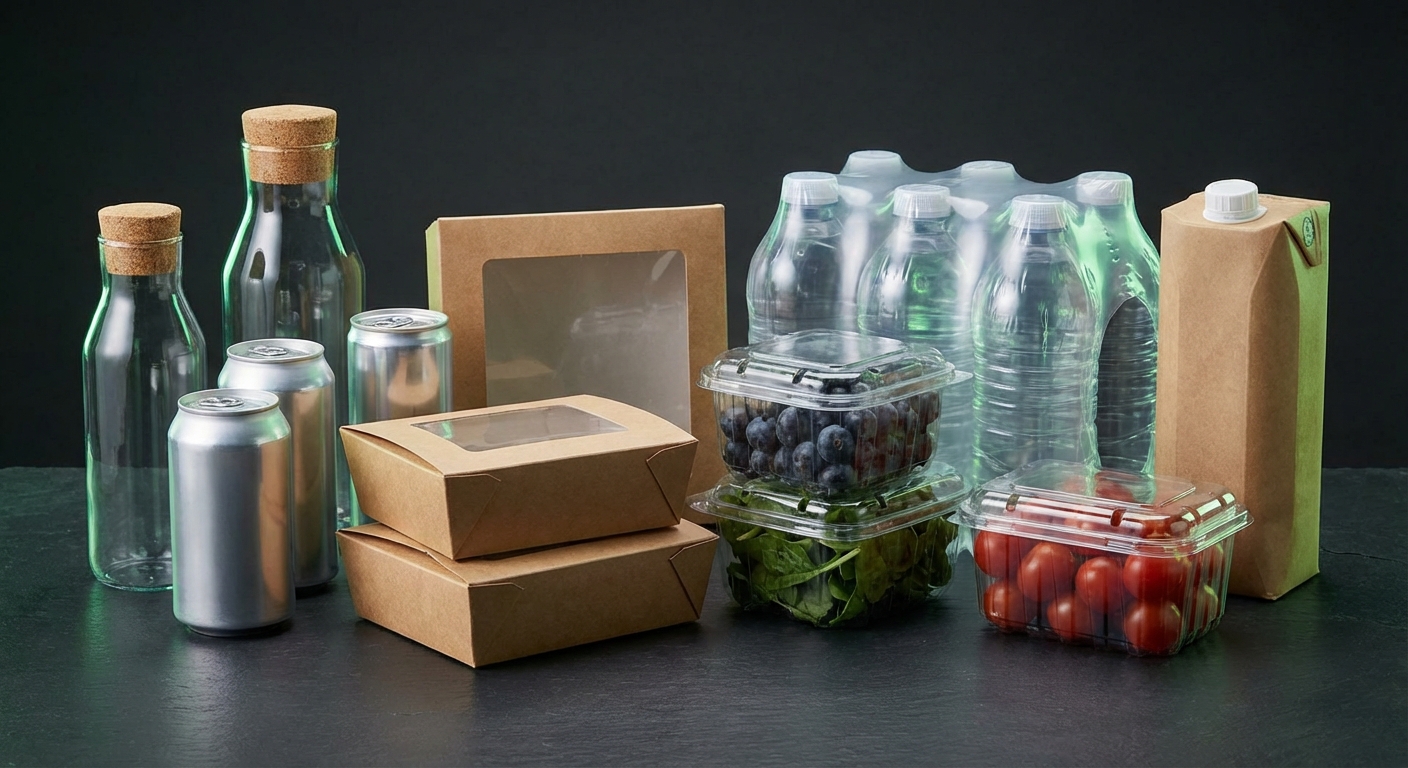
Food and beverage brands sit at the sharp end of the UK's Extended Producer Responsibility scheme. The sector uses more packaging formats, more material types, and more complex multi-component structures than almost any other industry. From rigid trays and flexible pouches to glass bottles and aluminium cans, the typical F&B portfolio is diverse, high-volume, and full of RAM assessment challenges.
That diversity is precisely what makes EPR compliance complicated for food and beverage producers. A single product line might involve primary packaging (the container touching the food), secondary packaging (the outer sleeve or multipack wrap), and tertiary packaging (the transit case). Each component has its own material type, weight, and RAM rating, and each must be reported separately to the RPD.
This guide addresses the specific EPR challenges facing food and beverage brands: the typical packaging types you need to account for, the common RAM pitfalls in this sector, how the Deposit Return Scheme interacts with EPR, and a practical step-by-step compliance workflow.
Why Food & Beverage Is Different
Several characteristics make the F&B sector uniquely complex under EPR.
Packaging Diversity
A mid-size food brand might place 50–200 distinct packaging components on the UK market across its product range. A beverage company with multiple SKUs in different sizes and formats can easily exceed that. Each component requires individual data capture: material type, weight, packaging class (primary, secondary, tertiary), packaging activity (selling, packing/filling, importing, distributing), and RAM classification.
Food Safety Constraints
Unlike many other sectors, food packaging must meet stringent food contact regulations. This limits the material substitutions available. You cannot simply switch to whatever the most recyclable material happens to be. You need materials that maintain food safety, shelf life, and barrier integrity. This constraint means some food packaging formats will inevitably carry lower RAM ratings than packaging in sectors without food contact requirements.
High Volume, Thin Margins
F&B brands typically operate on tighter margins than sectors like electronics or luxury goods. Every penny per unit matters. EPR fees that seem modest on a per-tonne basis can become significant when multiplied across millions of units. A £0.002 EPR cost per unit on 50 million units per year is £100,000.
Seasonal and Promotional Packaging
Limited editions, seasonal ranges, and promotional packs add complexity. Each variant may use different packaging that must be captured in your compliance data. Short production runs mean less time to optimise packaging design before the product is discontinued.
Typical F&B Packaging Types and Their RAM Ratings
Understanding how your most common packaging formats perform under the RAM framework is the foundation of F&B compliance management. Here is a practical guide to the formats most frequently found in food and beverage portfolios.
| Packaging Format | Common Materials | Typical RAM Rating | Key Challenge |
|---|---|---|---|
| Plastic bottles (clear PET) | PET | Green | Ensure labels are removable |
| Plastic bottles (coloured PET) | PET | Amber | Colour reduces reprocessing value |
| HDPE milk bottles | Natural HDPE | Green | Well-established pathway |
| PP pots & tubs | PP (clear or natural) | Green | Ensure no carbon black base |
| Ready meal trays (black) | CPET or PP with carbon black | Red | Carbon black fails NIR sortation |
| Flexible pouches (laminate) | PET/Alu/PE multi-layer | Red | Cannot separate layers for recycling |
| Flexible film (mono-PE) | LDPE or LLDPE | Amber | Flexible film collection is expanding |
| Glass bottles & jars | Glass | Green | Heavy; high tonnage per unit |
| Aluminium cans | Aluminium | Green | Excellent recyclability |
| Steel cans | Tinplate steel | Green | Widely recycled |
| Drinks cartons | Card/PE/Alu composite | Amber | Limited UK reprocessing capacity |
| Corrugated transit cases | Corrugated card | Green | One of the most recycled materials |
| Shrink wrap (multipack) | LDPE film | Amber | Flexible collection expanding |
The pattern is clear: rigid mono-material formats (bottles, cans, jars, corrugated) generally perform well. Multi-layer structures (laminates, composites) and carbon black plastics consistently score poorly. Flexible films sit in the middle, with their ratings expected to improve as collection infrastructure expands under the reformed scheme.
The Multi-Layer Packaging Problem
Multi-layer flexible packaging is the single biggest RAM challenge in the food and beverage sector. These structures, which combine two or more material layers bonded together, are ubiquitous in F&B because they provide excellent barrier properties at low weight. They keep products fresh, protect against moisture and oxygen, and extend shelf life.
The problem is that UK recycling infrastructure cannot currently separate these layers. When a pouch made of PET, aluminium foil, and polyethylene arrives at a materials recovery facility, it cannot be sorted into a single material stream. It ends up as residual waste, regardless of the fact that each individual layer material would be recyclable on its own.
For F&B brands, multi-layer packaging often represents the largest concentration of Red-rated tonnage in the portfolio. Common multi-layer formats include:
- Stand-up pouches for sauces, soups, baby food, and pet food
- Flow-wrap films for biscuits, snack bars, and confectionery
- Lidding films on ready meal trays and fresh produce punnets
- Vacuum-sealed packs for cheese, deli meats, and fish
- Sachet packaging for condiments, sugar, and single-serve portions
The move toward mono-material flexible packaging is accelerating, with several major film manufacturers now offering mono-PE and mono-PP alternatives. However, these alternatives may not yet match the barrier performance of traditional laminates for all applications, particularly those requiring extended ambient shelf life.
F&B Multi-Layer Strategy
Prioritise your multi-layer packaging by tonnage and assess each format for mono-material feasibility. Start with lower-barrier applications (short shelf life, chilled products) where mono-material alternatives are most viable, and work toward higher-barrier applications as the technology matures.
Food Contamination and RAM Implications
A question that comes up frequently from food brands: does food contamination affect the RAM rating? The short answer is no, but it indirectly matters.
The RAM assessment evaluates the inherent recyclability of the packaging material and format, not whether a specific used item has been rinsed clean. A PET bottle is rated Green whether or not the consumer washes it before putting it in the recycling bin. Food residue is a processing challenge for reprocessors, but it is factored into the infrastructure assessment rather than the individual component rating.
However, food contamination does matter indirectly in two ways:
- Design for emptying: Packaging that is difficult to empty (such as narrow-neck bottles containing viscous products) may generate higher contamination levels in practice, which can affect the overall system cost and eventually the base rates applied to that material.
- Material interaction: Some food products chemically interact with packaging materials in ways that affect recyclability. For example, grease contamination on paper/card makes it unsuitable for fibre recycling, which is one reason why pizza boxes and fast food wrappers face challenges in the paper recycling stream.
The Deposit Return Scheme and Drinks Containers
If you produce or import beverages sold in single-use containers in the UK, you need to understand how the Deposit Return Scheme (DRS) interacts with EPR. The DRS, which applies to drinks containers (plastic bottles, glass bottles, and cans within scope), creates a parallel collection and recovery system alongside kerbside recycling.
The key interactions are:
Reduced EPR Obligation for DRS-Captured Items
Drinks containers that are returned through the DRS are managed by the DRS scheme operator, not the local authority waste system. This means the EPR fee associated with those containers is adjusted to reflect the fact that they are not entering the municipal waste stream. In practice, producers of in-scope drinks will pay DRS deposit management costs instead of (or in addition to) a reduced EPR fee for those specific items.
Reporting Implications
You still need to report DRS-eligible containers in your RPD submission, but they are flagged separately. The fee calculation treats them differently from non-DRS household packaging. It is essential that your compliance data accurately distinguishes between DRS-eligible and non-DRS packaging to avoid overpaying or misreporting.
Practical Advice for Beverage Brands
- Track the DRS implementation timeline closely, as launch dates have shifted historically
- Ensure your packaging data system can flag DRS-eligible items separately
- Budget for both DRS participation costs and residual EPR fees on non-DRS packaging
- Note that not all drinks containers are within DRS scope; check the specific categories and size thresholds
Simplify your F&B compliance
Repackd handles the complexity of food and beverage packaging data: multi-component products, DRS flagging, RAM assessments, and fee projections, all in one platform.
F&B-Specific Reporting Nuances
Food and beverage brands encounter several reporting challenges that are less common in other sectors.
Multi-Component Products
A single product often uses multiple packaging components that must be reported individually. A ready meal, for example, might include a plastic tray, a plastic or foil lidding film, a cardboard sleeve, and an outer transit case. Each component has a different material type, weight, and RAM rating. Failing to break these down correctly leads to inaccurate reporting and potentially incorrect fee calculations.
Packaging Activity Classification
F&B brands must determine whether they are acting as the brand owner, the packer/filler, or the importer for each packaging item. Many F&B companies use contract manufacturers (co-packers) to produce their products, which creates questions about who bears the EPR obligation. In general, the brand owner holds the obligation for branded products, even if a third party physically packs the product.
Imported Products
If you import food or beverage products into the UK, you are likely the first person to place that packaging on the UK market, making you the obligated producer. This applies even if the packaging was designed and manufactured overseas. You are responsible for reporting the packaging and paying the associated fees based on UK RAM assessments.
Own-Label and Retailer Relationships
If you manufacture products for retail own-labels, the retailer is typically the brand owner and therefore the obligated party. However, this depends on the contractual arrangements and who is legally considered to be placing the packaging on the market. Clarify these obligations in your supply agreements.
Case Examples: Common F&B Compliance Scenarios
Scenario 1: Artisan Sauce Brand
A small sauce brand selling 500,000 glass jars per year with metal lids and paper labels. Total packaging tonnage: 35 tonnes (mostly glass). The glass and steel are Green-rated, the paper labels are Green-rated. This producer's EPR fee is relatively straightforward and low per tonne because glass and steel have established recycling pathways. Total annual fee estimate: £1,500–2,000.
Scenario 2: Snack Bar Manufacturer
A snack brand producing 20 million individually wrapped bars per year in metallised film flow-wrap, with cardboard multipacks and corrugated transit cases. The flow-wrap is Red-rated (metallised multi-layer film), the cardboard multipack is Green, and the corrugated is Green. Sixty percent of the producer's fee is driven by the Red-rated flow-wrap, despite it being the lightest component. Switching to a mono-material alternative would reduce the total fee by an estimated 25%.
Scenario 3: Ready Meal Producer
A chilled ready meal brand using black CPET trays, laminated lidding films, and cardboard sleeves. Both the tray (carbon black, fails sortation) and the lid (multi-layer, fails reprocessing) are Red-rated. Only the cardboard sleeve is Green. This portfolio faces significant fee modulation exposure. Switching the tray to a detectable dark pigment and the lid to a mono-PE peelable film would shift both from Red to Amber or Green, saving an estimated £8,000–15,000 per year depending on volumes.
Practical Compliance Steps for F&B Brands
Here is a step-by-step workflow tailored to food and beverage businesses.
Step 1: Create a Complete Packaging Inventory
List every packaging component across every SKU. For each component, record: material type, sub-type (e.g., PET, HDPE, PP), weight per unit, annual unit volume, packaging class (primary, secondary, tertiary), and any relevant features (colour, labels, coatings, closures). This is the foundation of everything that follows.
Step 2: Determine Your Obligation
Confirm that you meet the EPR obligation thresholds (£1m+ turnover and 25+ tonnes for small producers, £2m+ turnover and 50+ tonnes for large). Determine your packaging activity for each component (brand owner, packer/filler, importer, distributor).
Step 3: Conduct RAM Assessments
Assess each component through the five RAM stages. For F&B packaging, pay particular attention to multi-layer structures, carbon black usage, and label/closure interactions that may affect sortation. If you are unsure about specific material specifications, request datasheets from your packaging suppliers. Your RAM ratings will also determine the recyclability labels you must display under the mandatory OPRL labelling requirements from April 2027.
Step 4: Flag DRS-Eligible Items
If you produce beverages, identify which containers fall within the DRS scope and ensure they are correctly flagged in your reporting data.
Step 5: Calculate Weight Data Accurately
Weigh representative samples of each packaging component rather than relying on nominal supplier specifications. Small inaccuracies multiply across millions of units. A 2-gram error on a component used 10 million times per year represents 20 tonnes of misreported data.
Step 6: Submit to the RPD
Compile your data into the RPD submission format (15 columns per the DEFRA specification) and submit within the relevant deadlines. Large producers submit in April and October; small producers submit in April only.
Step 7: Optimise and Iterate
Use your fee projections to identify the highest-cost components and evaluate material alternatives. Engage your packaging design team and suppliers to develop improved specifications. Re-assess annually as your product range evolves and recycling infrastructure changes. Food and beverage companies that operate return schemes or take-back programmes for their packaging should also explore whether they can offset their EPR invoice through self-managed waste collection.
F&B brands that treat packaging compliance as a continuous improvement process, rather than an annual reporting burden, consistently achieve lower fees and better regulatory outcomes.
Built for food & beverage complexity
Repackd handles multi-component products, RAM assessments across every F&B packaging format, and automatic fee projections. See your compliance position in minutes.